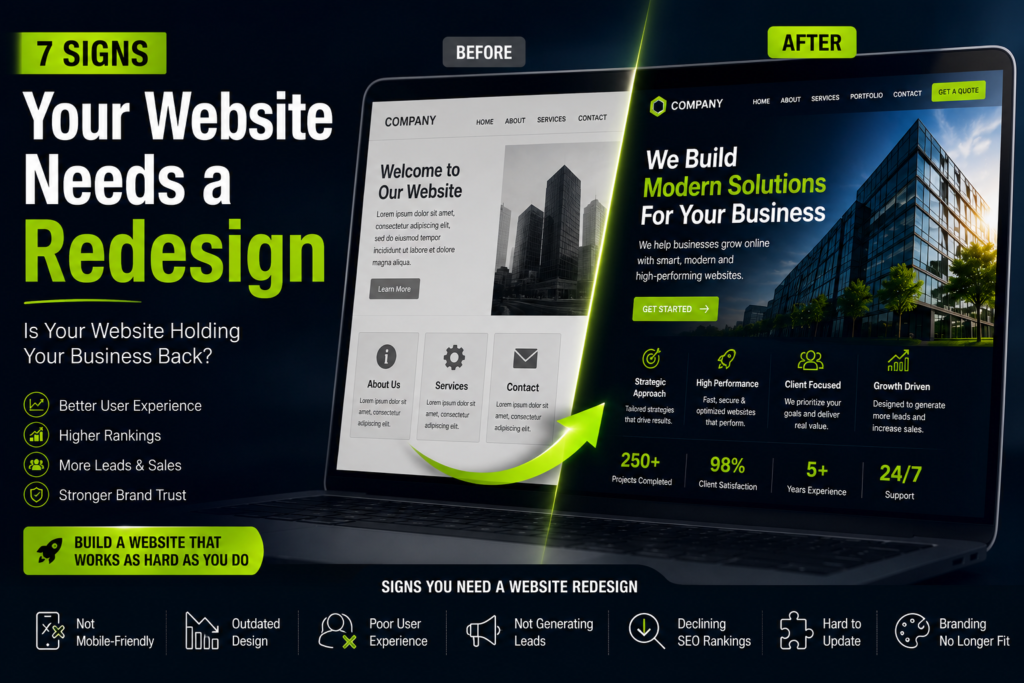
7 Signs Your Website Needs a Redesign (Before It Starts Costing You Customers)
Imagine walking into a beautifully designed retail store. Everything is clean, modern, organized, and inviting. You instantly trust the business before even speaking to anyone.
Now imagine entering another store with flickering lights, dusty shelves, confusing signs, and products scattered everywhere. Chances are you’d leave within seconds.
Your website creates exactly the same first impression.
Today’s customers judge your business within a few seconds of landing on your website. If your site feels outdated, loads slowly, or is difficult to navigate, visitors won’t wait around—they’ll move on to a competitor.
A website is no longer just an online brochure. It’s your most valuable sales tool, working around the clock to build trust, generate leads, and convert visitors into paying customers.
Many business owners assume they only need a redesign when their website “looks old.” In reality, appearance is only one piece of the puzzle. Performance, user experience, mobile responsiveness, search engine optimization, and conversion rates all play a major role in whether your website helps or hurts your business.
In this guide, we’ll explore the 7 biggest signs your website needs a redesign, explain why they matter, and show you how investing in a modern website can increase traffic, improve rankings, and generate more leads.
Why Website Redesign Matters More Than Ever
Your website is often the first interaction potential customers have with your business. Unlike a salesperson who can answer questions or build trust in person, your website has only seconds to convince visitors they’re in the right place.
A modern website should do much more than look attractive. It should:
- Build credibility
- Load quickly
- Work perfectly on every device
- Rank well on Google
- Guide visitors toward taking action
- Reflect your current brand
- Convert traffic into customers
If even one of these areas falls short, you’re likely losing valuable business opportunities.
Think of your website as an investment rather than an expense. Every improvement that increases trust, usability, or performance can lead to higher conversion rates and better long-term results.
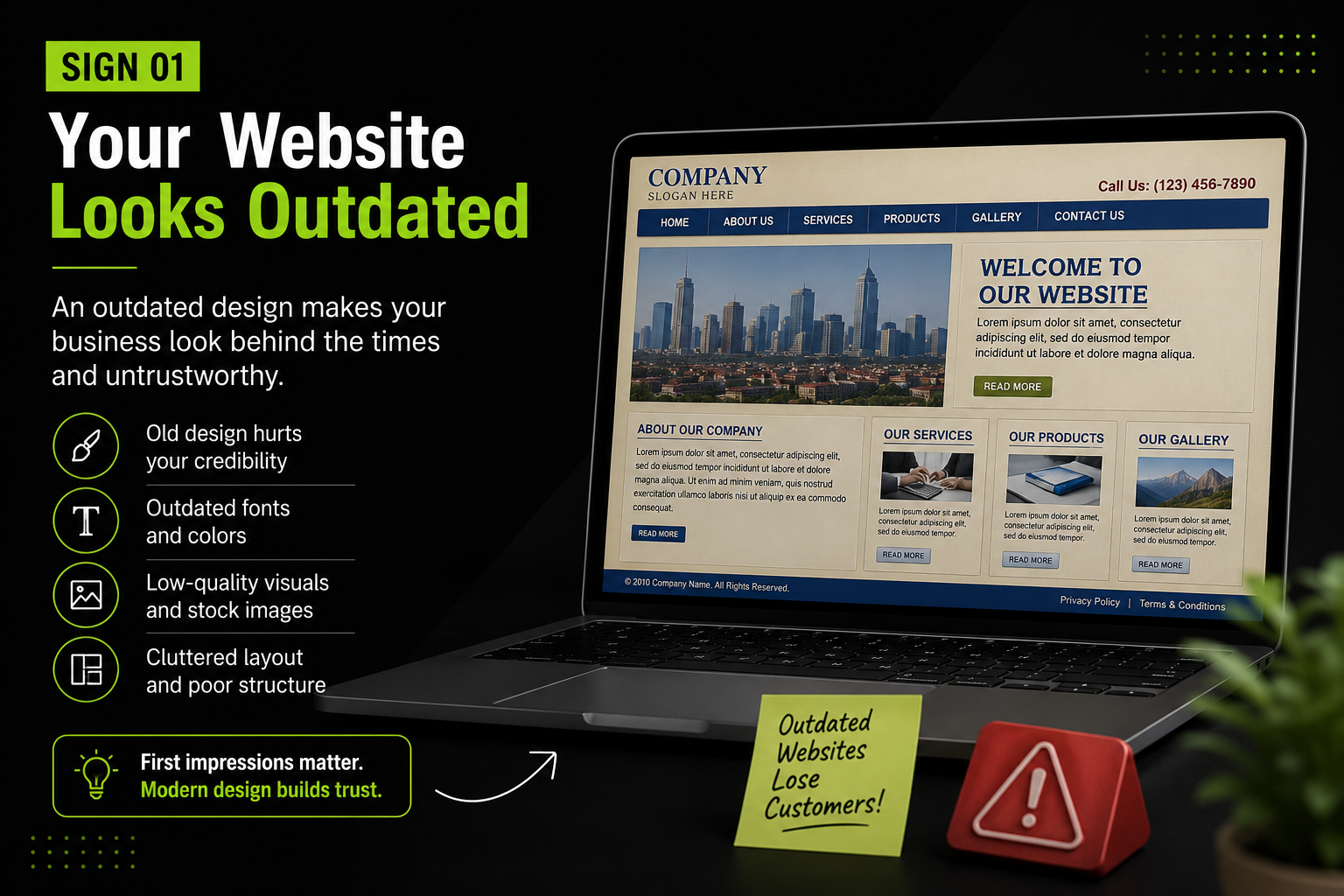
1. Your Website Looks Outdated
People naturally associate modern design with professionalism.
If your website still resembles something built five or six years ago, visitors may assume your business hasn’t kept up with the times either.
Some common signs of an outdated website include:
- Tiny text
- Cluttered layouts
- Low-quality images
- Too many colors
- Flashy animations
- Stock photos from another decade
- Old fonts
- Inconsistent branding
Modern websites focus on simplicity, whitespace, large typography, clean visuals, and intuitive navigation.
An outdated design doesn’t just affect aesthetics—it impacts trust.
Studies consistently show that users judge a business’s credibility based largely on its website design. Even if your products or services are excellent, a dated website can make visitors hesitate before contacting you.
Quick Checklist
If your homepage feels cluttered or visually overwhelming, it’s probably time for a redesign.
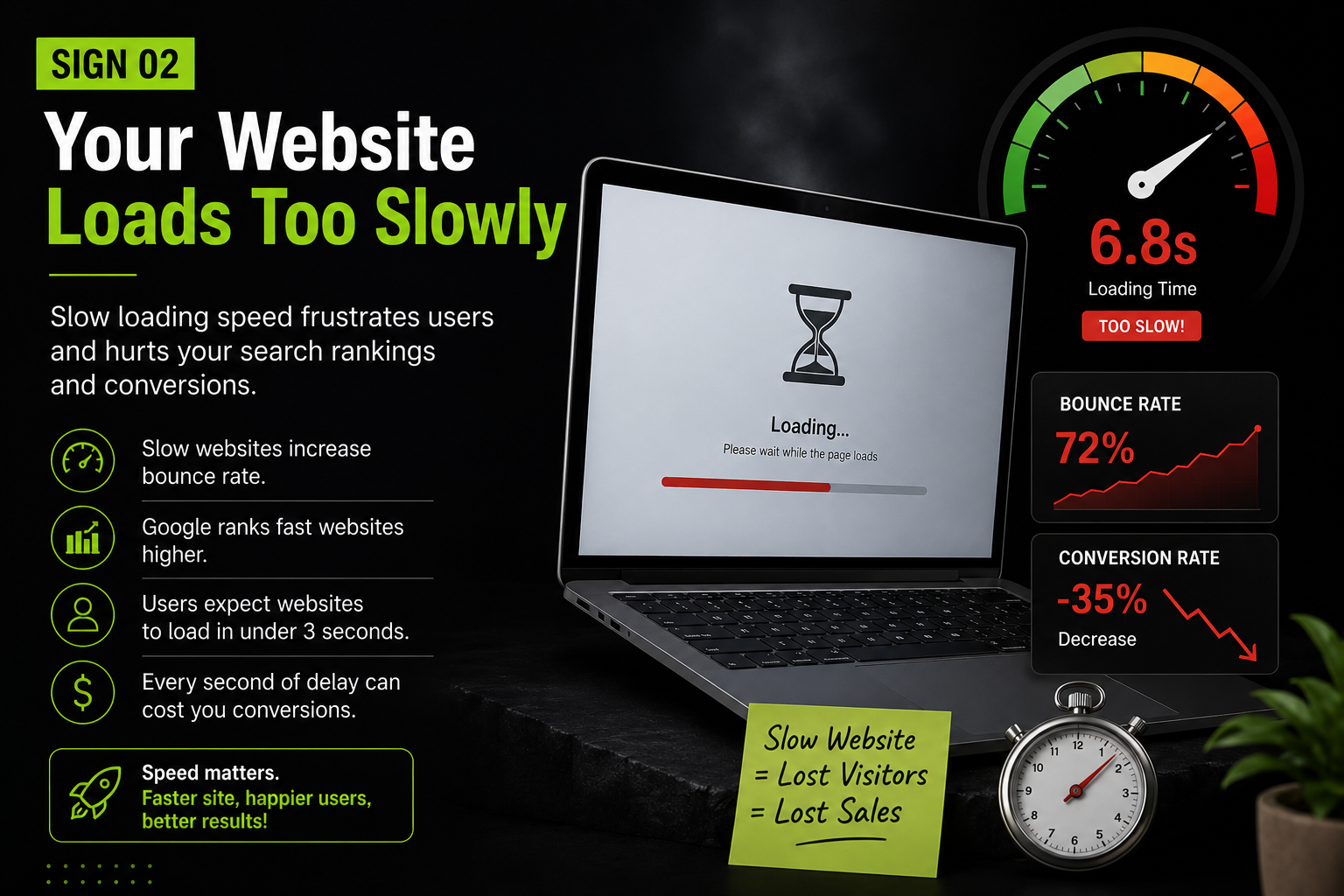
2. Your Website Loads Too Slowly
Website speed directly affects user experience, search rankings, and conversions.
Today’s users expect websites to load almost instantly. Every additional second of loading time increases the likelihood that visitors will leave before seeing your content.
Slow websites commonly suffer from:
- Oversized images
- Poor hosting
- Too many plugins
- Unoptimized code
- Heavy animations
- Excessive JavaScript
A slow website doesn’t just frustrate users—it also sends negative signals to search engines.
Google considers page speed an important ranking factor, meaning a sluggish site may struggle to compete in search results.
To improve loading speed:
- Compress images
- Use modern image formats like WebP
- Enable caching
- Choose reliable hosting
- Remove unnecessary plugins
- Minify CSS and JavaScript
- Use a CDN if serving global audiences
A fast website improves engagement, reduces bounce rates, and increases the chances that visitors will convert into customers.
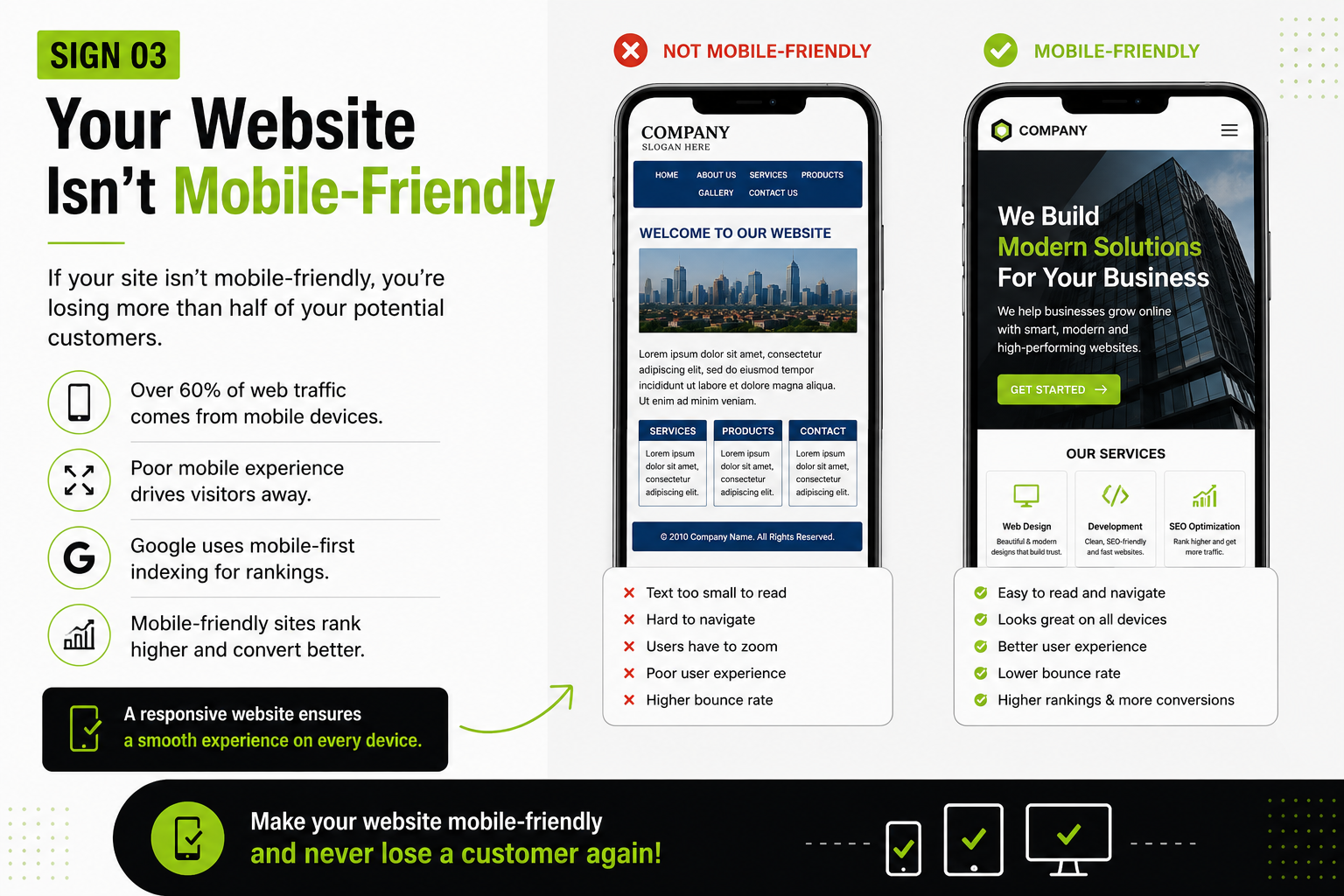
3. Your Website Isn’t Mobile-Friendly
More than half of all web traffic now comes from smartphones and tablets.
If visitors have to pinch, zoom, or struggle to navigate your site on a mobile device, they’re unlikely to stay for long.
A responsive website automatically adjusts to different screen sizes, ensuring a smooth experience whether someone visits from a phone, tablet, or desktop.
Signs your site isn’t mobile-friendly include:
- Tiny text
- Buttons that are difficult to tap
- Broken layouts
- Horizontal scrolling
- Images overflowing the screen
- Forms that are difficult to complete
Google also uses mobile-first indexing, meaning it primarily evaluates the mobile version of your website when determining search rankings.
A mobile-friendly redesign improves usability, search visibility, and customer satisfaction—all of which contribute to better business results.
4. Your Website Isn’t Generating Leads or Sales
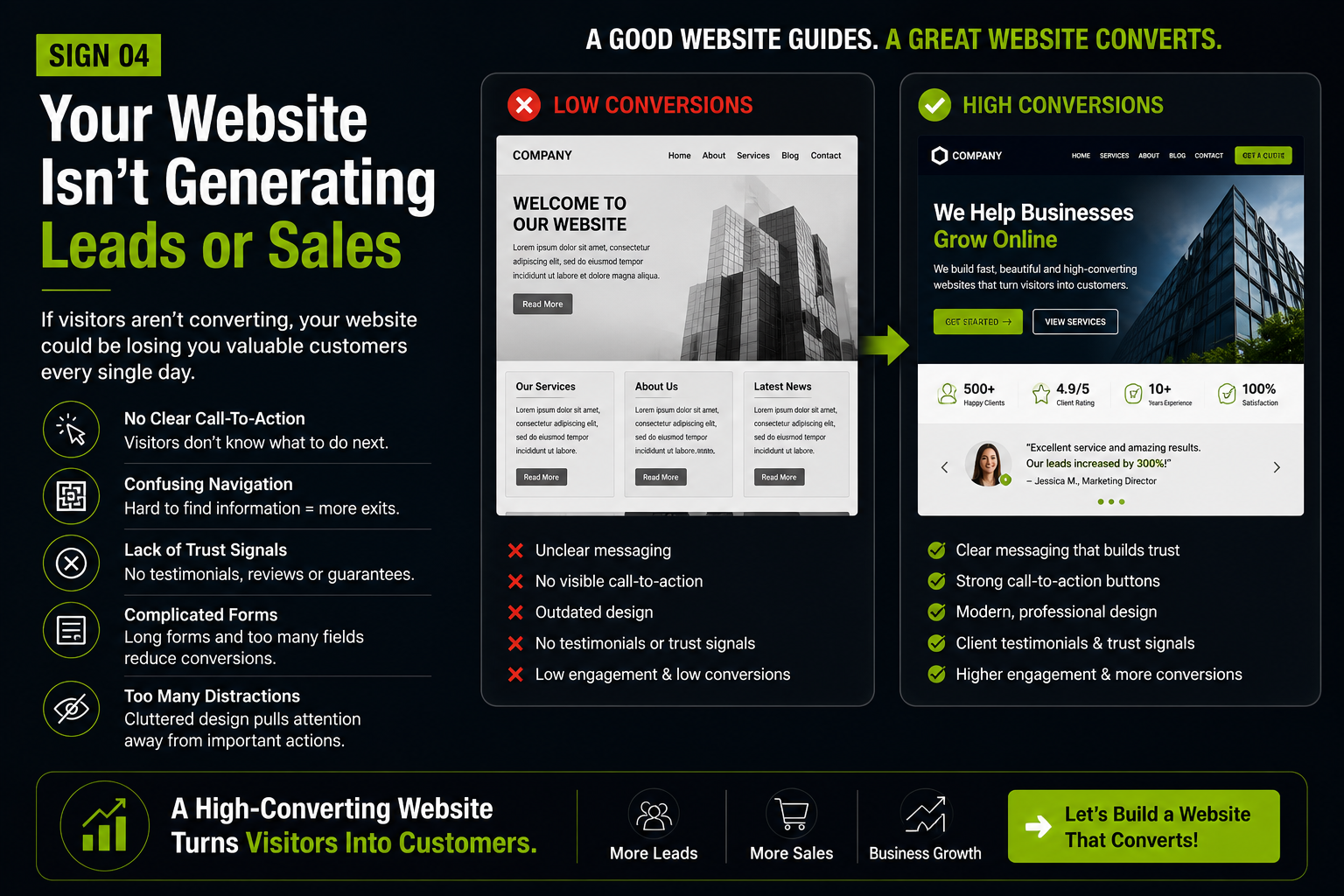
A website should do more than simply exist online—it should actively support your business goals. Whether you want people to book a consultation, request a quote, make a purchase, or contact your team, your website should guide visitors toward taking those actions.
If you’re getting traffic but very few inquiries or conversions, the problem may not be your marketing. It could be your website.
Common Reasons Visitors Don’t Convert
Many business websites unintentionally create friction that discourages potential customers. Some of the most common issues include:
- No clear call-to-action (CTA)
- Confusing navigation
- Poor homepage messaging
- Long or complicated contact forms
- Lack of trust signals
- Weak service descriptions
- Too many distractions on each page
Imagine visiting a website that tells you everything about the company—but never clearly explains what to do next. Should you call? Fill out a form? Request a quote? Download a brochure?
When visitors have to guess, many simply leave.
What a High-Converting Website Looks Like
A modern website is designed with the user journey in mind. Every page should guide visitors toward a specific goal.
Some proven conversion elements include:
- A clear headline explaining what you do
- Prominent “Contact Us” or “Get a Quote” buttons
- Client testimonials
- Case studies
- Trust badges or certifications
- Portfolio examples
- Frequently Asked Questions
- Easy-to-find contact information
If your website isn’t helping you generate consistent leads, a redesign focused on conversions can make a significant difference.
5. Your Search Rankings Are Declining
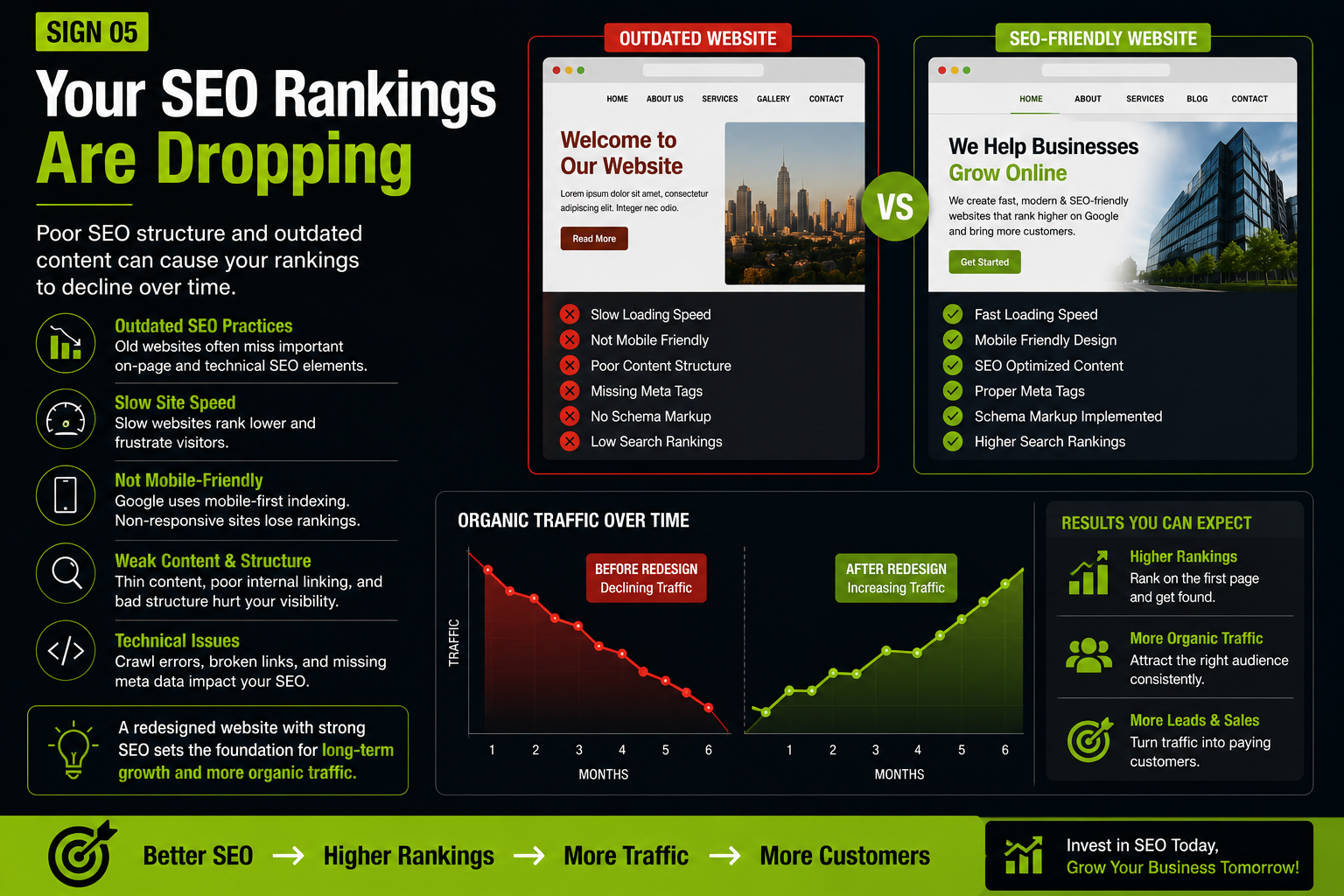
Search engine optimization (SEO) is constantly evolving. A website that ranked well a few years ago may now struggle to compete if it hasn’t kept up with modern best practices.
If you’ve noticed fewer visitors from Google, declining keyword rankings, or reduced inquiries, your website may need more than just fresh content—it may need a structural redesign.
SEO Problems Caused by Outdated Websites
Older websites often suffer from issues such as:
- Slow loading speeds
- Poor mobile experience
- Missing meta titles and descriptions
- Broken internal links
- Duplicate content
- Weak page structure
- Missing schema markup
- Large, unoptimized images
- Poor Core Web Vitals scores
Even if your content is excellent, technical issues can prevent it from ranking as well as it should.
How a Redesign Helps SEO
A professional redesign provides the perfect opportunity to:
- Improve page speed
- Optimize heading structure
- Refresh keyword targeting
- Improve internal linking
- Add schema markup
- Enhance mobile usability
- Fix crawl errors
- Improve URL structure
- Optimize image sizes
- Strengthen on-page SEO
Remember, SEO isn’t only about ranking higher—it’s about attracting qualified visitors who are more likely to become customers.
6. Your Website Is Difficult to Update
Your website should grow with your business.
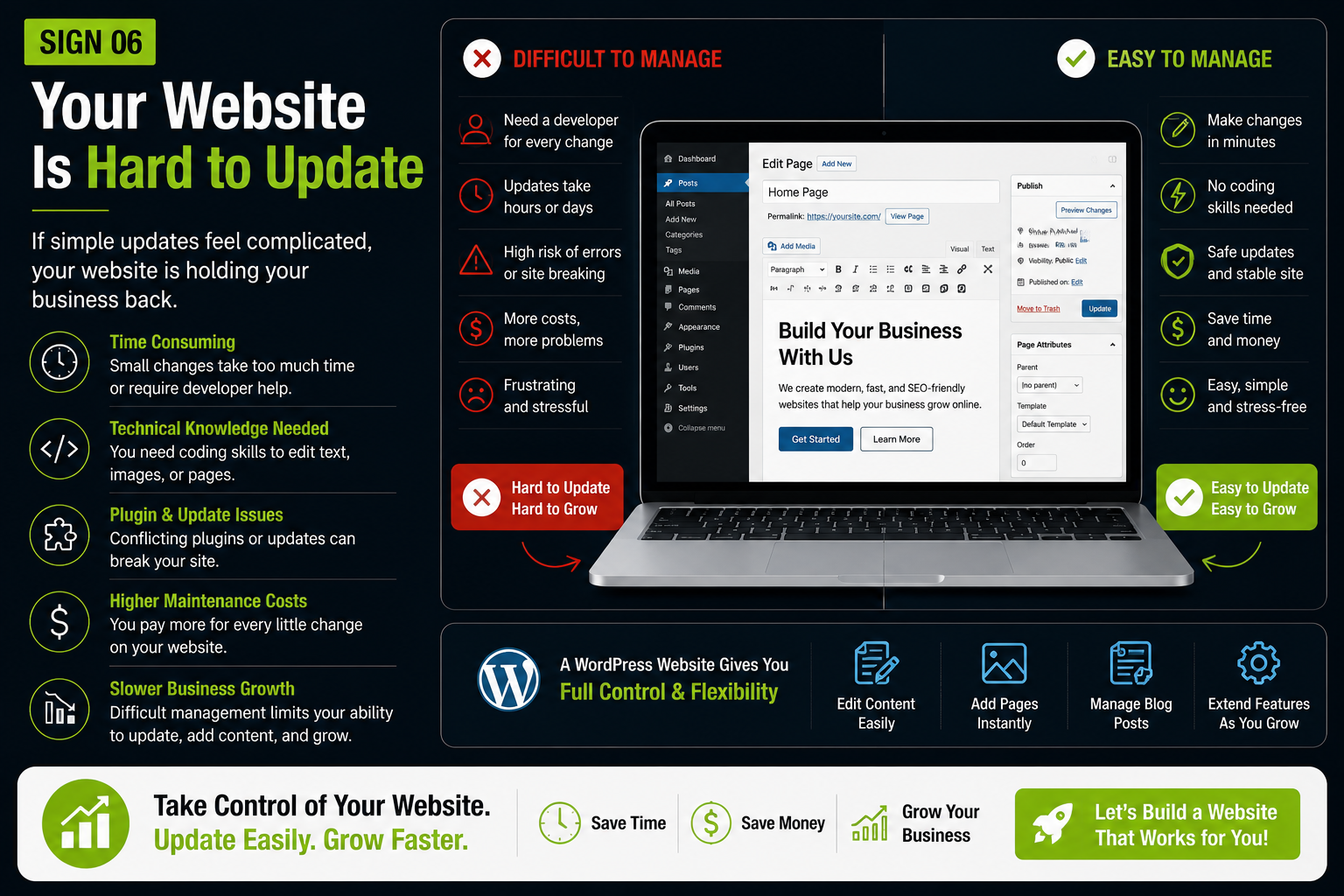
If making simple changes requires contacting a developer every time, updating plugins feels risky, or publishing a blog post becomes frustrating, your current setup may be holding you back.
Common Signs
- Updating content is complicated.
- Adding new pages takes too long.
- Your CMS feels outdated.
- Plugins frequently conflict.
- Your website breaks after updates.
- Managing products or services is difficult.
These problems slow down your marketing efforts and increase long-term maintenance costs.
Why WordPress Is Popular
A professionally built WordPress website allows you to:
- Publish blog posts easily
- Edit text without coding
- Add new service pages
- Manage images
- Update contact information
- Expand functionality as your business grows
When built correctly, WordPress provides flexibility without sacrificing performance or security.
A redesign can simplify website management and save you valuable time every month.
7. Your Branding Has Changed
Businesses evolve.
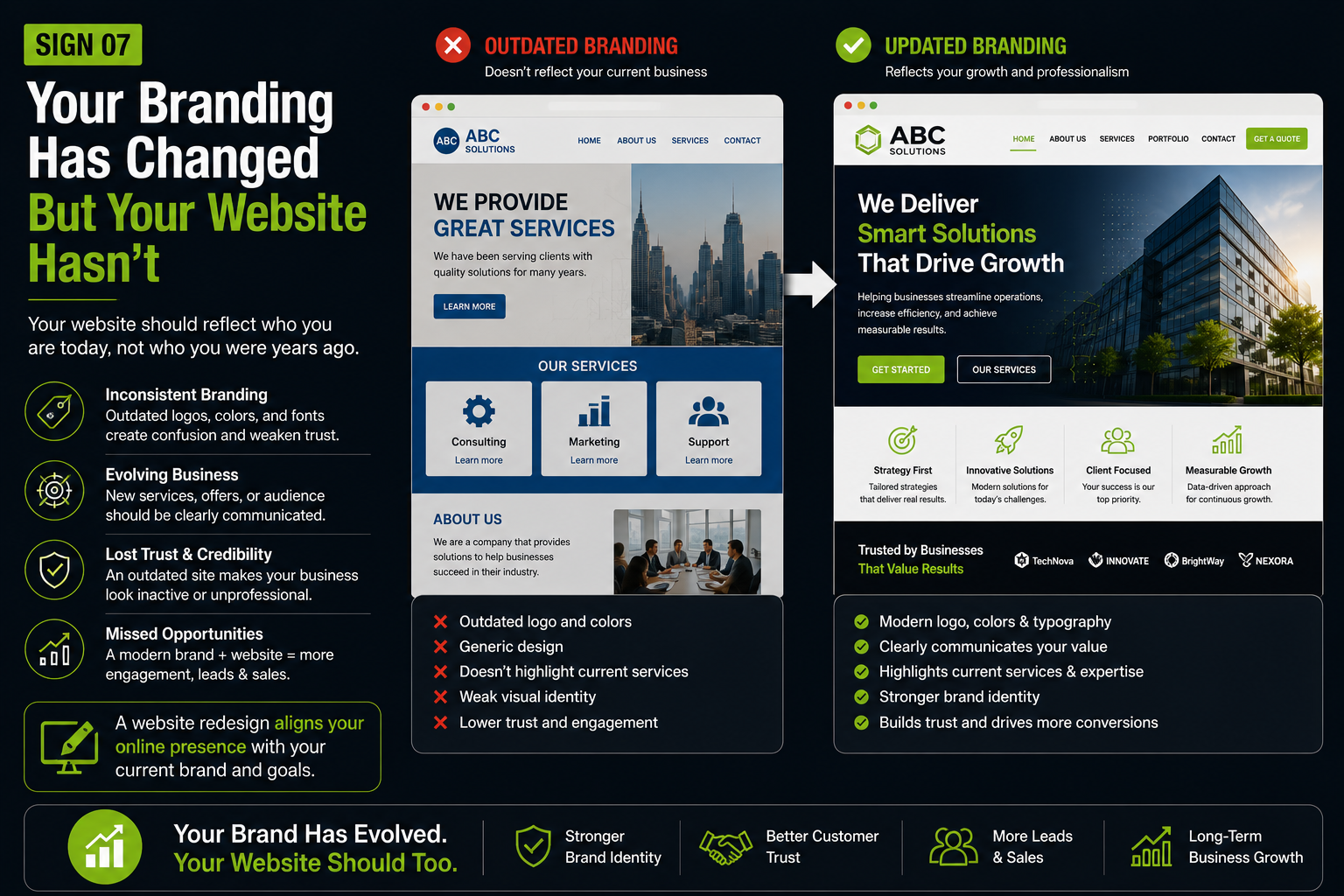
Perhaps you’ve introduced new services, refined your target audience, updated your logo, or changed your messaging.
But if your website still reflects the business you were several years ago, it creates confusion.
Your website should accurately represent:
- Your current services
- Brand colors
- Typography
- Photography
- Company values
- Tone of voice
- Target audience
Consistent branding builds trust.
When your social media, advertisements, business cards, and website all feel cohesive, customers perceive your business as more professional and reliable.
A redesign ensures your online presence matches who your company is today—not who it was years ago.
Website Redesign Checklist
Before starting a redesign, evaluate your current website using this checklist:
✅ Modern, clean design
✅ Mobile responsive
✅ Fast loading speed
✅ Clear navigation
✅ SEO-friendly structure
✅ Strong calls-to-action
✅ Updated branding
✅ High-quality images
✅ Easy-to-use contact forms
✅ Secure HTTPS connection
✅ Optimized service pages
✅ Blog section for SEO
✅ Internal linking
✅ Accessible design
✅ Analytics installed
If you answered “No” to several of these points, it’s likely time for a redesign.
Common Website Redesign Mistakes to Avoid
A redesign should improve your website—not accidentally damage your traffic or user experience.
Avoid these common mistakes:
Ignoring SEO
Changing URLs without proper redirects can lead to broken links and lost rankings.
Designing Only for Desktop
Always prioritize mobile users. Test every page on multiple screen sizes.
Using Too Many Animations
Animations should enhance the experience, not distract from it.
Forgetting About Speed
Beautiful websites should also load quickly. Optimize images, scripts, and hosting.
Removing High-Performing Content
Before redesigning, identify pages that already rank well and preserve their SEO value.
No Clear Call-to-Action
Every page should encourage visitors to take the next step.
Frequently Asked Questions
How often should a website be redesigned?
Most businesses benefit from a major redesign every 3–5 years, with ongoing updates in between to keep content fresh and technology current.
Will redesigning my website improve SEO?
A well-planned redesign can improve SEO by addressing technical issues, enhancing page speed, improving mobile usability, and creating a better site structure. However, it’s important to preserve existing rankings with proper redirects and SEO best practices.
How long does a website redesign take?
The timeline depends on the size and complexity of the project. A small business website may take a few weeks, while larger websites with custom functionality can take several months.
Can I redesign my website without changing my content?
Yes. Many redesigns focus on improving the layout, user experience, branding, and performance while keeping most of the existing content. In many cases, refreshing and expanding the content at the same time delivers even better results.
Is WordPress a good platform for a website redesign?
Yes. WordPress is one of the most flexible and widely used content management systems, making it an excellent choice for businesses that want a scalable, SEO-friendly, and easy-to-manage website.
Ready to Transform Your Website?
If you’re looking for a modern, fast, and SEO-friendly WordPress website, I’d be happy to help.
Whether you need:
- A complete website redesign
- A high-converting landing page
- A WooCommerce store
- Performance optimization
- Elementor Pro development
- Ongoing WordPress maintenance
I create websites designed to attract visitors, build trust, and generate more leads.
👉 Contact me today for a free website consultation and let’s build a website that works as hard as you do.